Blockfi is an identity verification checkpoint for remaining estate distributions
Blockfi is an estate distribution identity verification process tied to remaining client payouts after the company's bankruptcy proceedings. The key date was May 27, 2025: eligible account holders with outstanding distributions needed to complete identity verification by that deadline so the estate could match each claimant to the correct distribution path and reduce payment errors, duplicate claims, and fraud risk.
The May 27, 2025 deadline changed the page from onboarding to remediation
The current user need is narrower than a normal crypto account login. This page is about estate distribution identity verification, not opening a new interest account, depositing crypto, or comparing lending yields. The business that once offered crypto financial products has been wound down through bankruptcy administration, and the remaining public-facing flow centers on updates, payment selection, support, and remediation for clients still connected to distributions.
That distinction matters because the action is administrative. A claimant is trying to prove account ownership, confirm identity, and stay aligned with the distribution process. The deadline created a cut-off for a specific verification campaign, especially for eligible accounts and international business account remediation where the estate still needed documentation before releasing remaining value.
Where Kroll payment selection fits into the distribution path
Kroll appears in the public navigation as the payment selection channel, which places it in the practical workflow rather than in the old product experience. A claimant moves through an estate-administered payment process, and the distribution option needs to connect with verified identity details. That is why the identity check sits beside updates, the help center, and payment selection rather than beside trading or lending tools.
For someone returning after months away, the most useful mental model is a claims administration desk. The estate needs to know who is requesting a payout, whether the account is eligible, whether documentation is complete, and where the payment selection stands. Blockfi, in this context, is the name attached to the former account relationship and the estate communication channel.
Identity verification protects the remaining payout record
Identity verification protects a distribution record from being redirected by a bad actor. A crypto bankruptcy estate deals with names, emails, account histories, entity records, payment preferences, and claim status. Those records are valuable because they point to cash or digital-asset distributions. A verification step makes the payout process harder to hijack and easier to reconcile against the estate's records.
The process also helps separate a legitimate claimant from a similar-looking business name, stale email address, changed officer, or outdated contact file. International business accounts add extra friction because an entity claimant involves documentation beyond a personal identity check. The remediation language signals that some accounts still had unresolved requirements before the final payment path could be cleared.
International business account remediation has its own paperwork burden
Business claimants face a different job than individual users. The estate needs to connect the original account, the legal entity, the person acting for that entity, and the current payment selection. That chain must hold together cleanly. If the account belonged to a company, a director, officer, authorized signer, or administrator needs documentation that supports the request.
The public update language specifically mentions international business account remediation for clients with an outstanding estate distribution. That points to remaining cases where geography, entity status, or documentation gaps delayed completion. Blockfi does not read here as a consumer app ; it reads as a bankruptcy distribution record that still needs correct identity and authority data before funds move.
Phishing risk rises when distributions are still outstanding
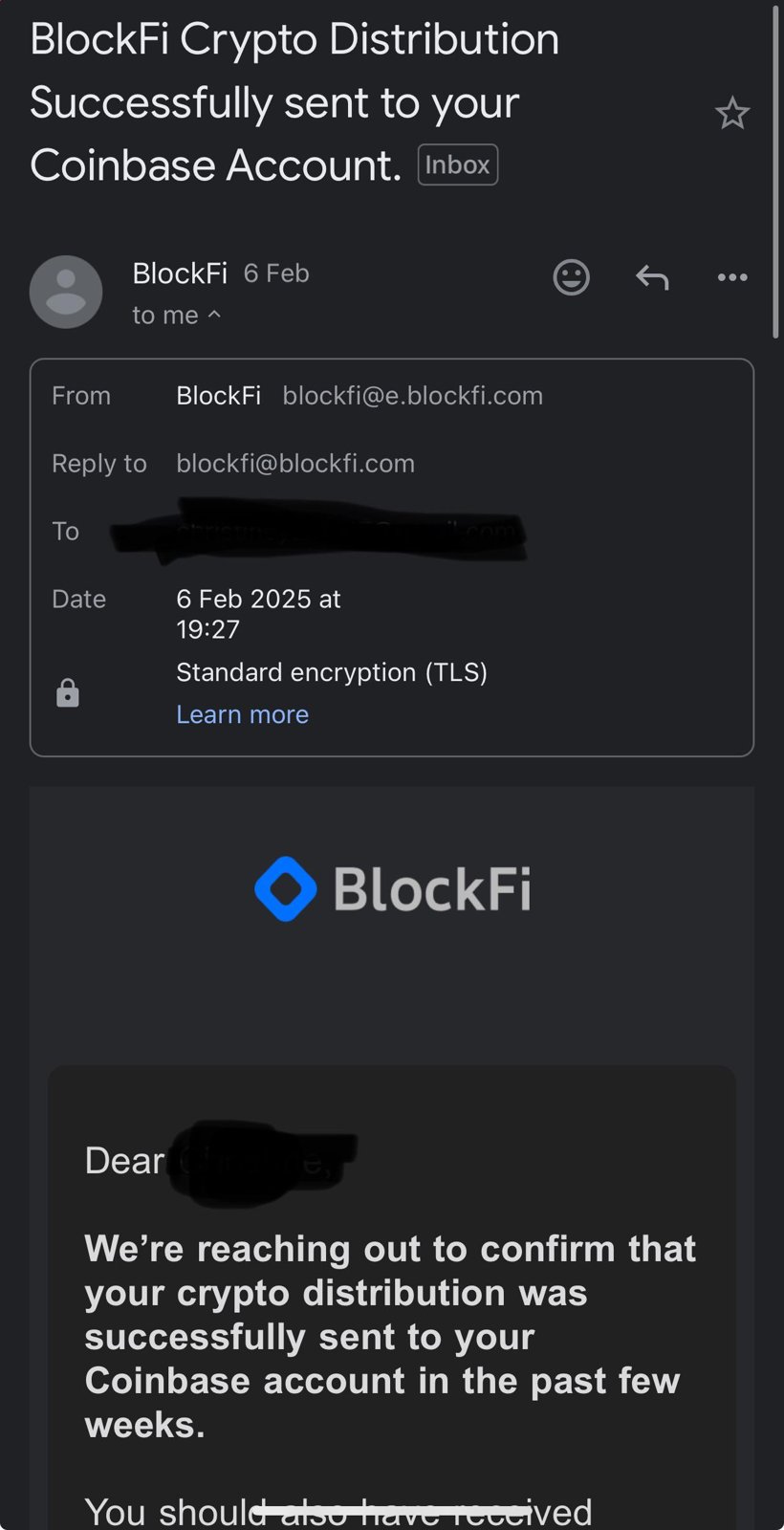
Payment deadlines attract impersonation attempts. A fraud message that references a payout, deadline, account balance, or missing verification step creates pressure, and pressure leads people to type credentials into the wrong place. The public page's phishing warning belongs directly beside the distribution update because estate communications give attackers a credible pretext.
A claimant should treat unexpected messages as high-risk when they ask for seed phrases, wallet recovery words, private keys, remote access, or extra "release fees ." Estate verification is about identity and payment administration; it does not require surrendering control of a personal crypto wallet. One clear caution applies: urgency language around a missed or pending Blockfi distribution is exactly the kind of lure that phishing campaigns reuse.
What a claimant should have ready before checking status
The cleanest workflow starts with records, not guesses. A returning client should gather the account email, any claim correspondence, entity documents for a business account, identification details, and prior distribution notices before trying to resolve a problem. That reduces support back-and-forth and makes it easier to identify whether the case is an identity issue, a payment selection issue, or an eligibility issue.
- Account email and name tied to the original account
- Distribution notices or claim correspondence already received
- Government identification for personal identity checks
- Entity authorization documents for business accounts
- Payment selection records connected with Kroll
- Notes on any address, email, or company-name changes
This preparation is especially important after the May 27, 2025 verification deadline because the question changes from "how do I complete the campaign on time?" to "what status does my unresolved distribution now have?" Blockfi-related support requests become easier to route when the claimant describes the specific missing step instead of treating the old account like an active product dashboard.
The old crypto lending context still explains user confusion
Many searchers remember the brand through crypto interest accounts, loans, wallets, and yield comparisons. That memory does not match the current estate-distribution task. The original product experience trained users to think in terms of balances, transfers, rates, and account access. The later bankruptcy workflow instead revolves around claims, distributions, payment instructions, identity checks, and support updates.
That shift explains why people search for the same name while looking for very different answers. One user wants to understand an old account balance. Another needs to finish documentation for a company. Another sees a payment notice and wants to know whether it is genuine. Another missed the deadline and needs to understand what the next administrative step means. Blockfi is the common label, but the intent is now distribution recovery rather than product use.
Payment selection is separate from proving who owns the claim
Payment selection answers where or how a distribution should be delivered. Identity verification answers whether the person or entity making that selection is connected to the eligible account. Both steps need to align. A valid payment preference attached to an unverified claimant creates risk, while a verified claimant with no usable payment selection still leaves the estate without a completed delivery route.
The difference also helps with troubleshooting. If a claimant has completed identity verification but has no distribution, the next issue might sit in payment selection, claim eligibility, support review, or remediation status. If payment selection looks complete but the estate still asks for documentation, the unresolved item is probably identity, authority, or account matching. Keeping those categories separate makes the process less opaque.
After the deadline, the main task is status clarity
Because May 27, 2025 has passed, the page now serves people trying to interpret what happened to an outstanding distribution. The deadline itself remains important because it marked the requested verification window for eligible accounts. A person who completed the process before that date has a different question from someone who did not respond, used an outdated email, or found the notice after the campaign closed.
The strongest next step is to frame the issue in precise terms: individual or business account, domestic or international account, identity verification completed or incomplete, payment selection made or missing, and distribution received or still outstanding. That language matches the estate workflow. It gives support staff a direct way to locate the relevant record without reopening the old Blockfi product history as if it were still operating normally.
Alternatives mean support routes, not replacement platforms
For this specific topic, an "alternative" is not another crypto lender. A different platform cannot release an estate distribution tied to a former account. The meaningful options are the available support and administration routes: public updates for broad announcements, the help center for procedural questions, Kroll payment selection for payout preferences, and direct remediation steps for accounts flagged as incomplete.
That framing keeps the decision practical. A claimant does not need a market comparison; they need the correct administrative lane. If the issue concerns a business claimant, the lane is documentation and authority. If the issue concerns a payout method, the lane is payment selection. If the issue concerns a suspicious message, the lane is fraud avoidance. The name Blockfi now points to a distribution record that must be handled through the estate process, not a new financial product.
Blockfi FAQ
Can a company representative complete verification for a business account?
A company representative can act for a business account when the documentation supports that authority. The estate needs to see the link between the original account, the legal entity, and the person submitting information. For international business account remediation, corporate records, authorization evidence, and consistent identifying details matter because the distribution belongs to the entity record.
Payment selection completed but no payout received means what?
Completed payment selection does not automatically mean every other requirement has cleared. The remaining issue could be identity verification, claim eligibility, business remediation, account matching, or distribution timing. Payment selection supplies the delivery preference; the estate still needs a verified claimant and a distribution record ready for release before a payout reaches the chosen route.
Which documents matter most for international business remediation?
The most important documents are the ones that prove the entity and the representative's authority. That includes records showing the company name tied to the account, current registration or equivalent business proof, authorized signer information, and identification for the person acting on behalf of the entity. Consistency across names, addresses, and account correspondence reduces review friction.
Recovering access after a phishing message about distributions
A phishing message about distributions should be treated as a security incident if credentials, identity files, or payment details were entered into a suspicious form. The claimant should secure email access, change reused passwords, preserve the message, and separate the fraudulent communication from the real estate process. Distribution scams commonly imitate deadlines, missing verification notices, and urgent payment-release language.